


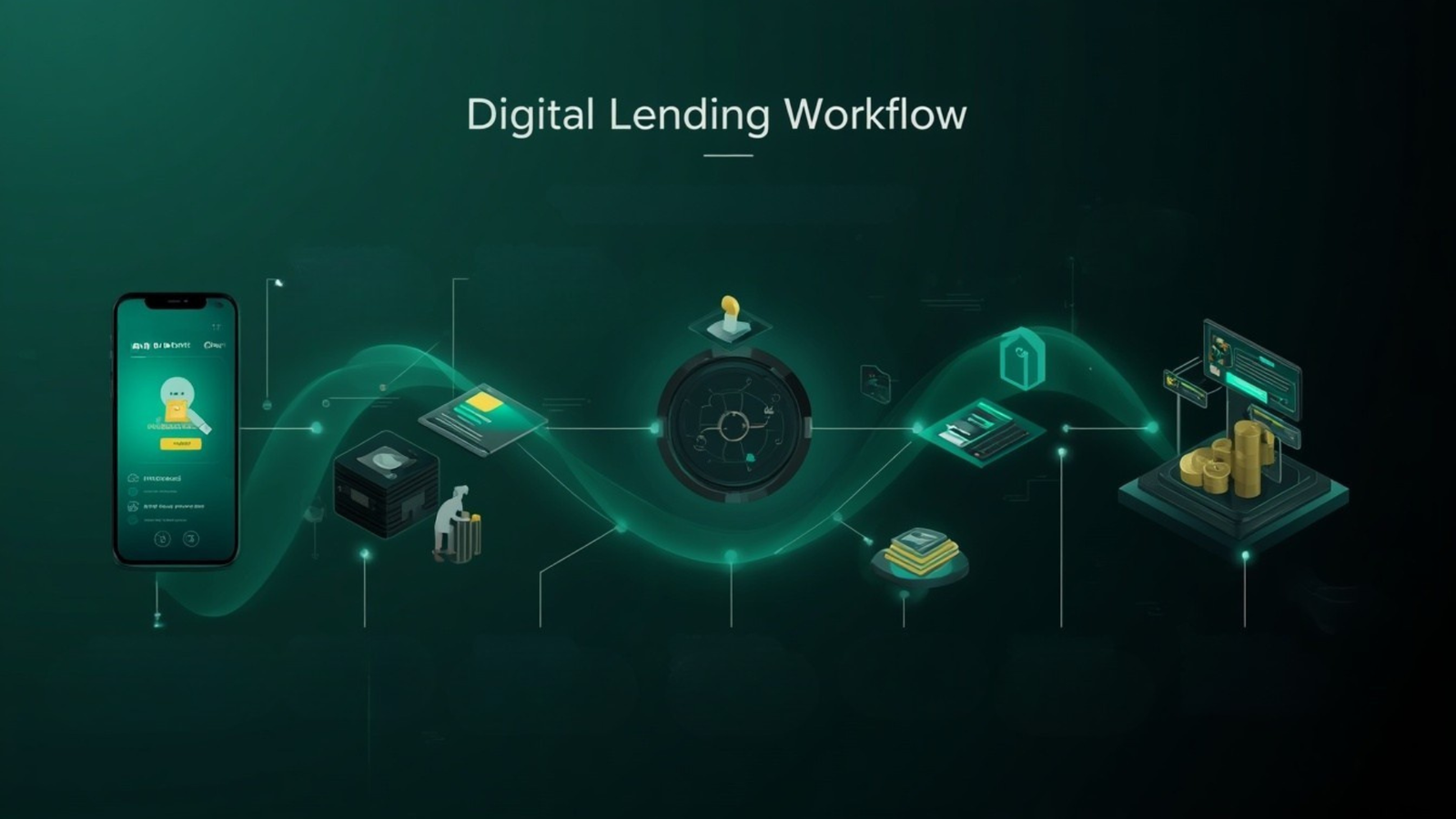
The financial industry is changing a lot because people want to get services in a faster and easier way. The old way of getting a loan was very complicated. Took a long time. You had to fill out a lot of papers and go to the bank times. Now technology is making it possible for people to get loans in a simpler way.
This change is making digital lending platforms very popular. These platforms help banks, financial companies and other businesses give people loans online in an more efficient way.
Digital lending platforms are different from the way of lending money. They use technologies like artificial intelligence and automation to make the whole process of borrowing money easier. You can do everything online from applying for a loan to getting your identity verified and getting your credit checked.
The use of lending solutions is not just changing the way people borrow money it is also helping financial companies work better reduce risks and give people a better experience.
As more businesses start using technology it is becoming very important for people to understand what digital lending platforms are, how they work and what benefits they offer. This is especially true for people who’re interested, in the future of financial services and digital lending platforms.
What is a Digital Lending Platform?
A digital lending platform is a software-based system, which allows lenders to provide loans through digital methods without depending on older paper-based processes. These platforms manage various stages, such as applying for a loan, verifying a customer, and approving a loan.
Simply put, a digital lending platform allows a borrower to find a lender through the internet, complete the loan application process, and manage repayments online.

These platforms are typically used by:
- Banks,
- FinTech companies,
- Credit unions,
- Online lenders,
- Financial services providers,
- Non-bank financial companies.
The main goal of these platforms is to make lending more effective and quick.
For instance, instead of going to a bank and waiting for several days, customers can apply for loans online.
Why Are Digital Lending Platforms Becoming Popular?
Customers are getting used to lending more and more because of how they want to do banking nowadays and all the new tech that is coming out.
Modern customers prefer financial services that are:
- Fast and convenient
- Available anytime and anywhere
- Easy to understand
- Personalized according to their needs
- Accessible through mobile devices
Traditional lending processes often involve challenges such as:
- Long approval periods
- Manual document verification
- Limited accessibility
- Higher operational costs
- Complex application procedures
Digital lending platforms solve many of these problems by introducing automation and intelligent decision-making.
Key Reasons Behind Digital Lending Growth
| Factor | Impact on Lending Industry |
|---|---|
| Increasing smartphone adoption | Makes online borrowing easier |
| AI-based decision-making | Improves loan approval accuracy |
| Digital identity verification | Reduces verification time |
| Data analytics | Enables better risk assessment |
| Cloud technology | Provides scalable lending infrastructure |
| Customer demand | Increases need for faster services |
How Do Digital Lending Platforms Work?
Digital lending platforms use technology to simplify the loan process, making borrowing faster, more convenient, and paperless. The process typically involves several automated steps.
1. Online Loan Application
Customers apply through a website, mobile app, or digital platform by providing:
- Personal details
- Income information
- Employment details
- Loan requirements
- Financial history
Unlike traditional lending, applications can be completed remotely without physical paperwork.
2. Digital Identity Verification
The platform verifies the applicant’s identity using secure digital technologies to speed up onboarding and reduce fraud.
Common verification methods include:
- Electronic Know Your Customer (eKYC)
- Biometric authentication
- Document verification
- Digital identity checks
3. Credit Assessment and Risk Analysis
AI-powered systems evaluate a borrower’s creditworthiness using advanced technologies and multiple data points for more accurate risk assessment.
Modern platforms use:
- Artificial intelligence
- Machine learning algorithms
- Predictive analytics
- Automated credit scoring
4. Automated Loan Decision
After evaluating the application, the platform automatically generates a lending decision, reducing manual work and speeding up approvals.
Automation allows lenders to:
- Approve eligible applications faster
- Reduce manual review requirements
- Improve decision consistency
- Minimize processing delays
5. Digital Loan Disbursement
Once approved, loan funds are transferred directly to the borrower’s bank account through digital payment networks, providing a faster and smoother experience.
6. Repayment Management
Digital lending platforms simplify loan repayment by allowing customers to:
- View payment schedules
- Receive reminders
- Make online payments
- Track outstanding balances
Types of Digital Lending Platforms
The function of digital lending platforms covers a broad range of clients from personal loans to the funding of companies as well as having embedded finance options.
1. Consumer Lending Platforms
Consumer lending platforms disburse loans directly to consumers for their personal financial requirements.
Here are a couple of examples of consumer lending platforms:
- Personal loans
- Student loans
- Health loans
- Consumer credit loans
2. Business Lending Platforms
Business lending platforms assist firms in acquiring funds for expansion and day-to-day operations.
Here are a couple of examples of common offerings of business lending platforms:
- Small business loans
- Working capital loans
- Bill discounting
- Merchant loans
3. Peer-to-Peer Lending Platforms
Peer-to-peer lending platforms help in bridging borrowers to lenders by providing them with flexible financing alternatives.
The benefits of peer-to-peer lending include:
- Alternative funding
- Better rates of interest
- Speed of application process
4. Embedded Lending Platforms
Embedded lending is the process through which lending is integrated in platforms and thus making financing available to customers throughout their daily interactions.
Here is a list of examples of embedded lending:
- E-commerce sites providing payment solutions
- Business applications issuing working capital loans
- Marketplaces offering merchant loans
Key Features of Digital Lending Platforms
A successful digital lending solution includes several important features that improve both lender and borrower experiences.
| Feature | Description |
|---|---|
| Online application | Allows customers to apply digitally |
| Automated underwriting | Speeds up approval decisions |
| Credit scoring tools | Evaluates borrower risk |
| Digital verification | Improves security |
| Data analytics | Provides better lending insights |
| Payment integration | Simplifies repayments |
| Customer dashboards | Improves transparency |
Benefits of Digital Lending Platforms
Digital lending platforms streamline the borrowing process through automation, making loan services faster, more efficient, and more convenient for both lenders and customers.
1. Faster Loan Processing and Approval
Digital platforms automate verification, credit assessment, and approvals, significantly reducing loan processing time compared to traditional methods.
With automated workflows, lenders can:
- Review applications faster
- Reduce manual processing time
- Provide quicker approval decisions
- Improve customer satisfaction
2. Improved Customer Experience
Digital lending platforms provide a seamless online borrowing experience, allowing customers to complete the entire loan process from anywhere.
Customers can:
- Apply for loans from anywhere
- Upload documents digitally
- Track application status
- Receive instant notifications
- Manage repayments online
3. Lower Operational Costs for Lenders
Managing traditional lending processes requires significant resources, including employees, paperwork management, and physical infrastructure.
Digital lending systems reduce these expenses through automation.
| Traditional Lending Process | Digital Lending Process |
|---|---|
| Manual document checking | Automated verification |
| Branch-based applications | Online applications |
| Human-based evaluation | AI-supported analysis |
| Paper records | Digital data management |
| Longer processing time | Faster decisions |
By reducing operational complexity, financial institutions can provide services more efficiently.
4. Better Credit Risk Management
Risk assessment is one of the most important parts of lending. Poor risk evaluation can lead to higher loan defaults and financial losses.
Digital lending platforms improve risk management by analyzing large amounts of data and identifying borrower patterns.
Advanced lending systems can evaluate:
- Credit history
- Income patterns
- Financial behavior
- Transaction data
- Repayment ability
This helps lenders make more informed decisions and reduce potential risks.
5. Increased Financial Inclusion
A major advantage of digital lending technology is its ability to expand access to financial services.
Many individuals and small businesses face difficulties accessing traditional loans due to:
- Limited banking access
- Lack of credit history
- Geographic limitations
- Complex application processes
Digital platforms help bridge this gap by making lending services available through online channels.
This supports financial inclusion by allowing more people and businesses to participate in the formal financial system.
Role of AI in Digital Lending Platforms
The application of AI is recognized as one of the important technological advancements of the lending industry.
Using AI in lending technologies helps banks and other institutions in automating processes, enhancing accuracy, and providing a high-quality service.
Due to the capabilities of AI, it is possible not to rely on standard ways of evaluation to assess any loan application, as AI makes use of comprehensive information and sees relevant patterns in data that human beings are not able to notice.
How AI Is Transforming Digital Lending
1. Credit Scoring with AI
AI is used in credit scoring because it improves the level of analysis of spending behavior, payment history, finances, and other behaviors in comparison with traditional forms of credit scoring.
2. Automated Loan Underwriting
AI improves the process of an automated loan underwriting because it allows fast applications analysis, risk detection, correct approval, and reduces manual work.
3. Fraud Detection and Prevention
With the help of AI, suspicious actions are detected in the following process:
- Fakes’ identity detection
- Monitoring of suspicious transactions
- Duplicate application detection
- Behavior analysis
4. Customized Lending Experience
AI helps to analyze customers’ profiles and needs and thus recommend them the right products, providing the customers with comfortable borrowing.
Technologies Powering Digital Lending Platforms
1. AI and Machine Learning (AI and ML): The use of AI and ML in credit scoring, risk analysis, fraud detection, and lending decision-making ensures more efficient and accurate lending.
2. Application Programming Interfaces (APIs): Using APIs allows banks, credit bureaus, payment systems, and verification services to share data.
3. Cloud Computing: Allows for flexible, reliable, and secure lending solutions that can be launched quickly.
4. Data Analysis: Allows lenders to assess customer behavior and make better lending decisions using real-time data.
5. Blockchain Technology: Blockchains improve security, transparency, and trust in the lending process.
Digital Lending Platform Use Cases
Digital lending platforms are changing services. They make borrowing simple and easy to access.
1. Banking Industry
Banks use lending platforms. They automate loan processing. This speeds up customer onboarding. It also improves mortgage and business lending services.
Applications include:
- Automating loans
- Digital mortgage processing
- Lending to businesses
- Faster customer onboarding
2. FinTech Companies
FinTech companies use lending platforms. They provide lending solutions. These solutions are digital-first. They need manual work.
They use these platforms to provide:
- loans
- Alternative credit options
- Lending services on mobile
- Automated products

3. Small and Medium Businesses
Digital lending helps medium businesses. They get funding fast. They apply online. They get approvals fast. They use credit checks.
This helps businesses manage cash flow. It supports growth.
4. E-Commerce Platforms
E-commerce businesses add lending services. They do this to their platforms. They provide financing. They do this during the shopping experience.
Examples include:
- Buy now, pay later services
- Merchant financing
- Customer credit options
Digital Lending Platforms vs Traditional Lending
| Factor | Digital Lending Platforms | Traditional Lending |
|---|---|---|
| Application process | Fully online | Often branch-based |
| Approval speed | Faster | Slower |
| Documentation | Digital | Paper-based |
| Decision-making | Automated systems | Manual review |
| Customer access | Available anytime | Limited by working hours |
| Data analysis | Advanced analytics | Traditional evaluation |
Digital lending does not completely replace traditional banking but enhances it by making lending processes faster, smarter, and more accessible.
Why Businesses Should Invest in Digital Lending Solutions
Financial organizations that adopt digital lending technology can gain a competitive advantage in a rapidly changing market.
Key business benefits include:
- Improved customer retention
- Faster service delivery
- Reduced operational expenses
- Better risk control
- Increased market reach
- More personalized financial products
As customers continue shifting toward digital experiences, businesses that provide efficient lending solutions are more likely to meet future expectations.
Obstacles Faced by Digital Lending Platforms
Though digital lending platforms provide plenty of benefits, there are several obstacles such as technology, compliance, security as well as trust among customers that organizations need to deal with to make sure that the lending service is reliable and safe.
1. Data Security and Privacy Issues
It is necessary to protect sensitive banking and personal information of customers to avoid any breach and keep public confidence.
Data of clients may contain the following info:
- Identity data
- Bank details
- Salary information
- Credit history
- Transaction history
The organization needs:
- To employ reliable encryption methods
- To implement secure authentication systems
- Regular security checks
- Data protection rules
- Effective access management
2. Compliance Issues
Digital lenders need to act according to the rules of the financial regulation that change constantly and can differ from one location to another.
3. Risks of Fraud and Identity Theft
Artificial intelligence systems allow fraud detection, but it is necessary to watch and act immediately in case of a cyber threat.
Some of the cases when frauds try to:
- Using fake identities
- Providing incorrect financial information
- Falsifying data from applications
- Establishing fake accounts
4. Technology Integration Problems
Tech platforms in this sector are difficult to integrate with traditional banking systems due to some limitations of infrastructure.
Some of the issues include:
- Restrictions of legacy systems
- Difficulties in data transfer
- Issues concerning compatibility of Application Programming Interface
- Costs of implementation
5. Keeping Trust of Customers
It is necessary to protect customer data and ensure transparency of lending operations.
Future Trends Shaping Digital Lending Platforms
The future of digital lending will be influenced by emerging technologies that improve speed, personalization, and security.
Financial organizations are moving toward smarter lending ecosystems where automation and intelligence play a larger role.
1. AI-Powered Lending Decisions
Artificial intelligence will continue becoming a core part of lending operations.
Future AI-driven lending platforms will provide:
- Faster credit evaluations
- More accurate risk predictions
- Personalized loan recommendations
- Automated financial decisions
AI will help lenders move from traditional credit evaluation toward intelligent lending models.
2. Embedded Lending Growth
Embedded lending is expected to become one of the most important developments in financial services.
Instead of customers visiting separate banking platforms, lending services will be available directly within digital experiences.
Examples include:
- Shopping platforms offering instant financing
- Business software providing working capital loans
- Payment platforms offering credit options
This approach creates a smoother borrowing experience.
3. Alternative Credit Scoring Models
Traditional credit scores do not always represent a complete picture of financial behavior.
Future lending platforms will increasingly use alternative data sources such as:
- Digital payment history
- Business transaction patterns
- Cash flow analysis
- Financial behavior insights
This can help lenders serve customers who may not have traditional credit histories.

4. Real-Time Lending Decisions
Customers increasingly expect instant financial services.
Future digital lending solutions will focus on:
- Real-time application analysis
- Instant verification
- Immediate loan decisions
- Faster fund transfers
Speed will become a major competitive advantage in the lending industry.
5. Increased Use of Cloud-Based Lending Solutions
Cloud technology will continue supporting the expansion of digital lending platforms.
Cloud-based systems provide:
- Better scalability
- Improved performance
- Cost efficiency
- Easier system updates
Financial organizations can quickly adapt their lending services according to market demands.
Best Practices for Implementing Digital Lending Platforms
The success of a digital lending platform within organizations relies on the three basic pillars: data security, customer experience, and innovative use of technology.
- Safeguard Data: Ensure that security measures in place deliver maximum protection of sensitive information of customers.
- Ensure Smooth Customer Journey: Create an easy and intuitive process for applying and obtaining loans to ensure greater customer satisfaction.
- Adopt AI Responsibly: Use AI-based decision-making under strict human monitoring to make it fair and transparent.
- Improve Risk Management Practices: Combine the results of AI analysis with reliable risk management techniques to enhance lending quality.
- Regularly Upgrade Technology: Keep lending platforms updated, as this will positively affect their operational efficiency.
Conclusion
Digital lending platforms have become a major force driving innovation in the financial industry. By combining artificial intelligence, automation, cloud technology, and data analytics, these solutions are creating a faster and more efficient lending environment.
Modern banks, Fintech firms, and businesses are realizing that the implementation of digital lending technology goes beyond making the lending process more efficient. It is about becoming better in meeting clients’ wants, overcoming challenges, and providing lending services that can be expanded easily.
As consumer needs evolve continuously, businesses that base their lending solutions on secure, smart, and customer-centered technology will have better chances to thrive.
The next generation lending will be digital in every sense of the word, and it will also be smarter, customized to meet the requirements of individual clients and businesses alike.
Frequently Asked Questions (FAQs)
1. What is a digital lending platform?
A digital lending platform is an online system that enables customers to apply for, receive, and manage loans digitally with minimal paperwork.
2. How do digital lending platforms work?
They automate the entire lending process, including loan applications, identity verification, credit assessment, approvals, fund disbursement, and repayments.
3. What technologies are used in digital lending platforms?
Digital lending platforms use technologies such as artificial intelligence, machine learning, APIs, cloud computing, data analytics, and blockchain.
4. What are the benefits of digital lending platforms?
Key benefits include faster loan approvals, better customer experience, improved risk assessment, lower operational costs, and greater financial accessibility.
5. How does AI improve digital lending?
AI enhances digital lending by automating credit decisions, detecting fraud, analyzing customer data, and delivering personalized lending experiences.
6. What is the future of digital lending?
The future of digital lending includes AI-powered decisions, embedded finance, alternative credit scoring, real-time approvals, and more personalized lending services.